Designed for importers, wholesalers, distributors, retailers, and commercial project buyers sourcing artificial plants from overseas suppliers.
When sourcing artificial plants wholesale, the biggest challenge is not only finding a supplier with competitive prices. The more important question is whether the products delivered in bulk will match the quality, appearance, and performance expected from the approved sample.
Many sourcing problems happen after the order is confirmed. A sample may look attractive, but the final shipment may show differences in materials, colors, structure, finishing, or durability. For buyers importing artificial plants from overseas suppliers, these differences can lead to customer complaints, project delays, additional costs, and reduced brand reputation.
Before placing a purchase order, buyers should evaluate product quality from multiple perspectives. This checklist covers ten important factors to confirm with suppliers before production begins.

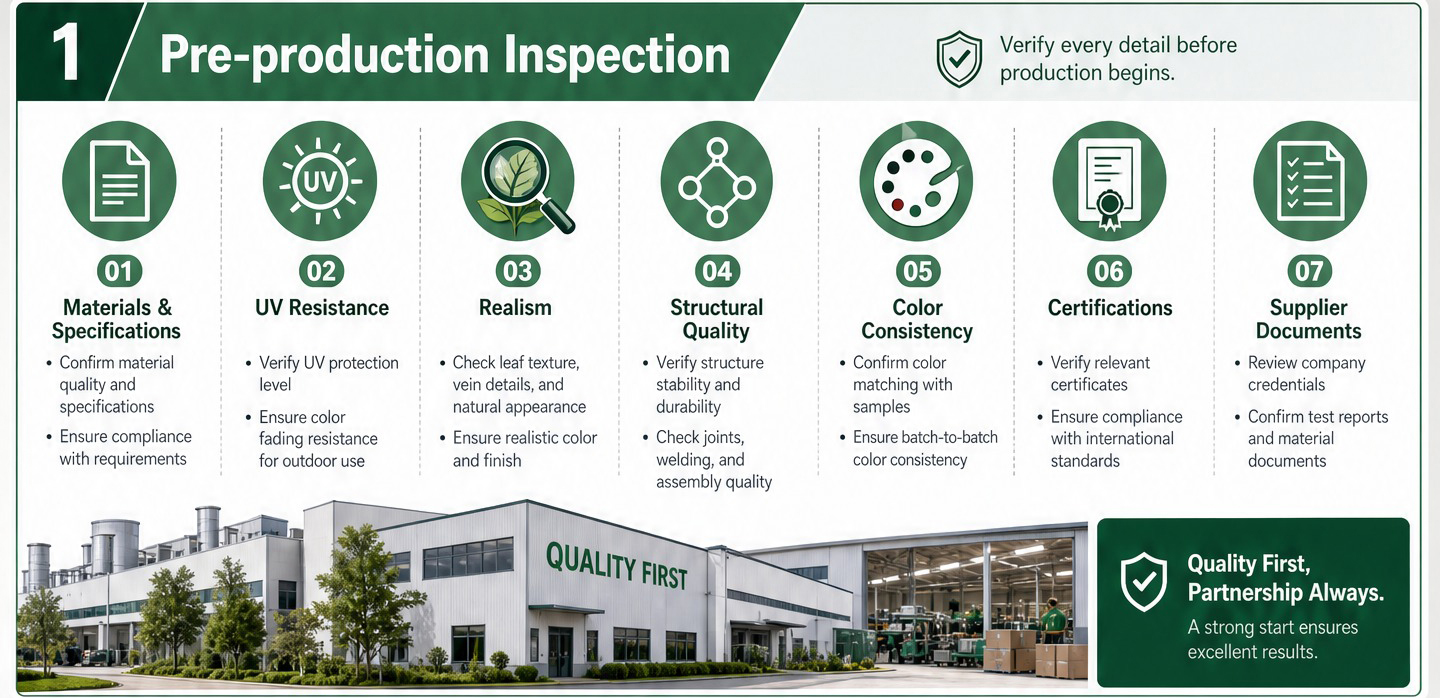
1. Material Quality and Product Specification Verification
The materials used in artificial plants directly affect appearance, durability, and application suitability. Different materials serve different purposes. PE, PP, PVC, polyester fabric, and Real Touch materials each have different characteristics in texture, flexibility, color performance, and cost.
Before placing an order, buyers should confirm whether the actual materials match the supplier’s product description.
Important questions include:
• What materials are used for leaves, flowers, stems, and trunks?
• Is the product designed for indoor or outdoor applications?
• Are UV-resistant materials available?
• Are fire-retardant options available for commercial projects?
• Are test reports or certifications available?
Physical samples remain one of the most effective ways to evaluate material quality. Buyers should check the texture, flexibility, surface finish, color accuracy, and overall workmanship rather than relying only on product photos.
2. UV Resistance and Outdoor Performance Verification
For outdoor artificial plants, UV resistance is one of the main factors affecting product lifespan. Sun exposure can gradually cause colors to fade, plastic materials to become brittle, and products to lose their original appearance.
Some suppliers may describe products as “UV resistant” without providing enough information about testing or material treatment. Buyers should verify the actual performance before ordering.
Ask suppliers:
• Has the product passed accelerated weathering tests?
• Which testing standard was used, such as ASTM G154 or QUV?
• How many exposure hours were included in testing?
• Are UV stabilizers added during raw material production?
• Does the test apply to the exact product being purchased?
A supplier should clearly explain whether a product is suitable for outdoor environments, partially covered areas, or indoor decoration only.

3. Realism and Manufacturing Craftsmanship
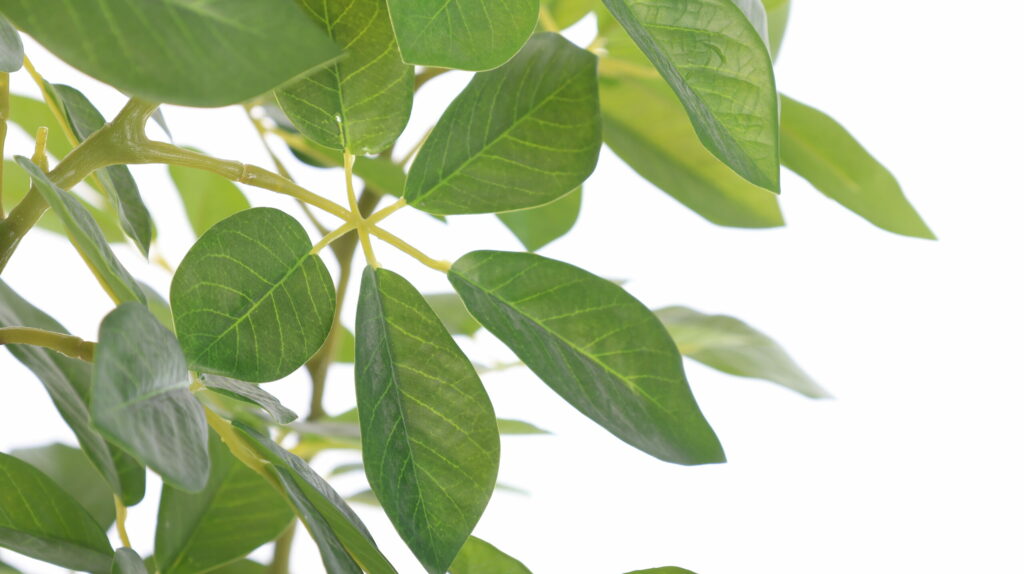
For artificial plants, realism depends on details. Buyers, designers, and end customers often judge quality through leaf shape, color variation, branch arrangement, and surface texture.
When reviewing samples, pay attention to:
• Whether leaf shapes look natural rather than repetitive
• Whether colors include realistic variation instead of a flat green appearance
• Whether surfaces avoid excessive plastic shine
• Whether stems and branches follow natural growth patterns
• Whether connection points and finishing details are carefully handled
Do not evaluate samples only under showroom lighting. Professional lighting can hide imperfections. Inspect products under natural daylight, take close-up photos, and examine the product by touch.
A realistic artificial plant should maintain a natural appearance from both a distance and close range.
4. Structural Strength and Product Stability
Appearance is only one part of artificial plant quality. The internal structure determines whether the product can survive transportation, installation, and long-term use.
Common structural problems include loose branches, weak connections, falling leaves, unstable bases, and poor assembly after shipping.
Before ordering, check:
• Branch and stem connection strength
• Leaf attachment methods
• Internal support structures
• KD (knock-down) assembly quality
• Trunk and base connection strength
For large artificial trees, buyers should also evaluate:
• Center of gravity
• Resistance to shaking or tilting
• Stability after installation
• Ability to maintain shape after adjustment
A product used in hotels, offices, retail stores, or public spaces needs to remain stable after installation, not only look good when first unpacked.
5. Production Consistency: Will Bulk Orders Match Approved Samples?
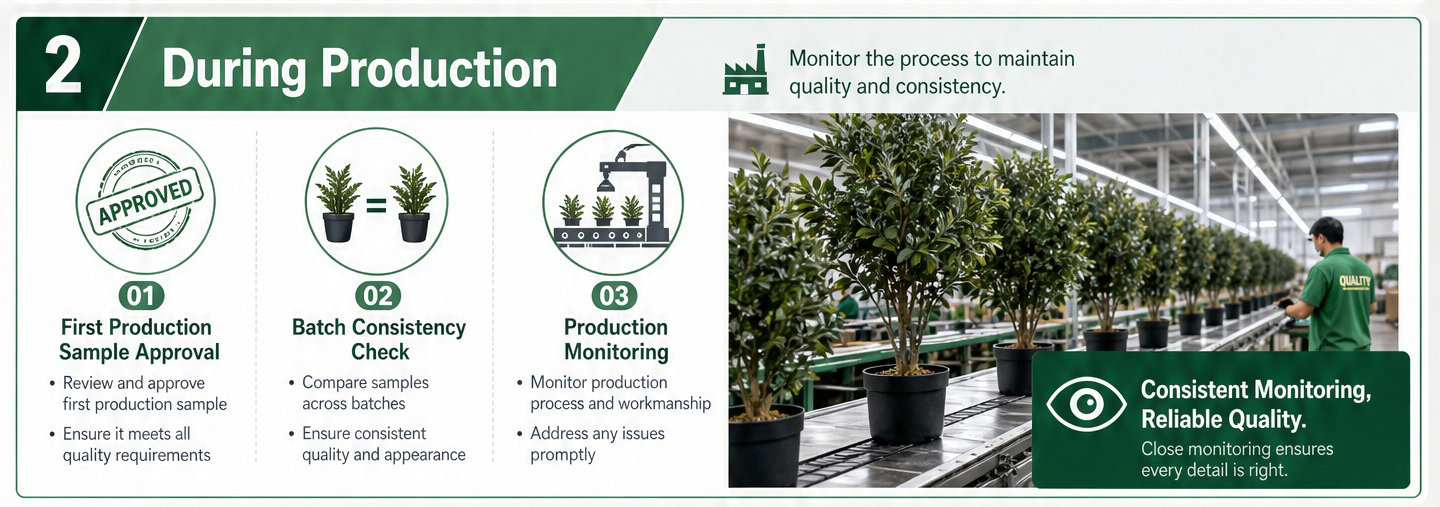
One of the most common risks in overseas sourcing is the difference between a sample and the final bulk shipment.
Differences may appear in:
• Leaf density
• Product dimensions
• Color shades
• Material thickness
• Finishing quality
• Branch quantity
This can happen when samples receive extra attention but mass production follows different standards.
A safer quality control process includes:
1. Pre-production sample approval
2. First production piece confirmation
3. Mid-production inspection
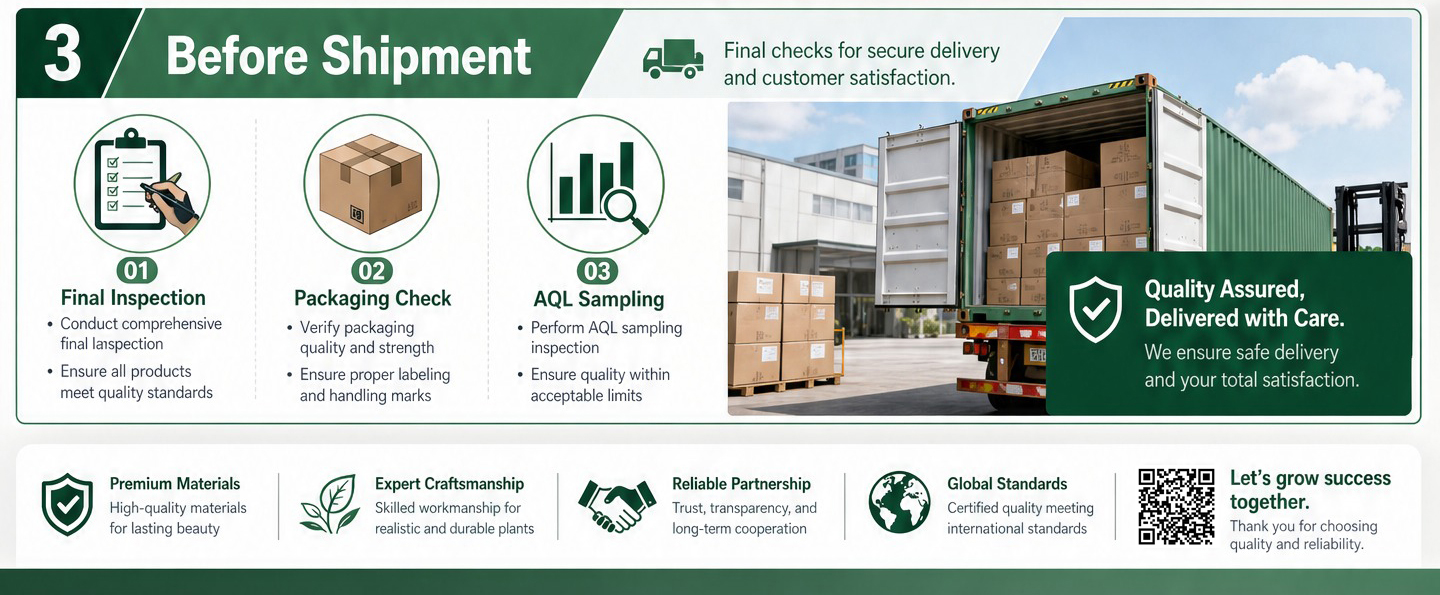
4. Pre-shipment inspection
For larger orders, buyers may also use third-party inspection companies such as SGS, BV, or TÜV and agree on inspection methods based on AQL standards.
The goal is to make sure the approved sample represents the complete production process, not just one carefully prepared piece.
6. Fire Retardant Performance for Commercial Projects
Artificial plants used in hotels, offices, shopping malls, restaurants, and other commercial spaces may need to meet fire safety requirements.
Before purchasing, buyers should confirm:
• Which fire standards are required in the destination market
• Whether the certificate covers the exact product model
• Whether testing was completed by a recognized laboratory
Common standards may include:
• NFPA 701
• BS 5852
• EN 1021
A general certificate that does not clearly relate to the purchased product may not provide enough protection for a commercial project.
Suppliers should be able to explain available fire-retardant options and provide supporting documents when required.
7. Chemical Safety and Market Compliance
Beyond appearance and durability, imported artificial plants may need to comply with chemical safety requirements in different markets.
Depending on the destination country, buyers may need to consider regulations such as:
• EU REACH
• US CPSIA
• California Proposition 65
Potential concerns include restricted substances such as lead, phthalates, formaldehyde, and other regulated materials.
Before ordering, request:
• Chemical safety test reports
• Testing laboratory information
• Testing dates
• Product models covered by the reports
Buyers should confirm that tested products match the products they actually purchase. Compliance documents are only useful when they apply to the correct materials and markets.
8. Pot, Base, and Overall Product Stability
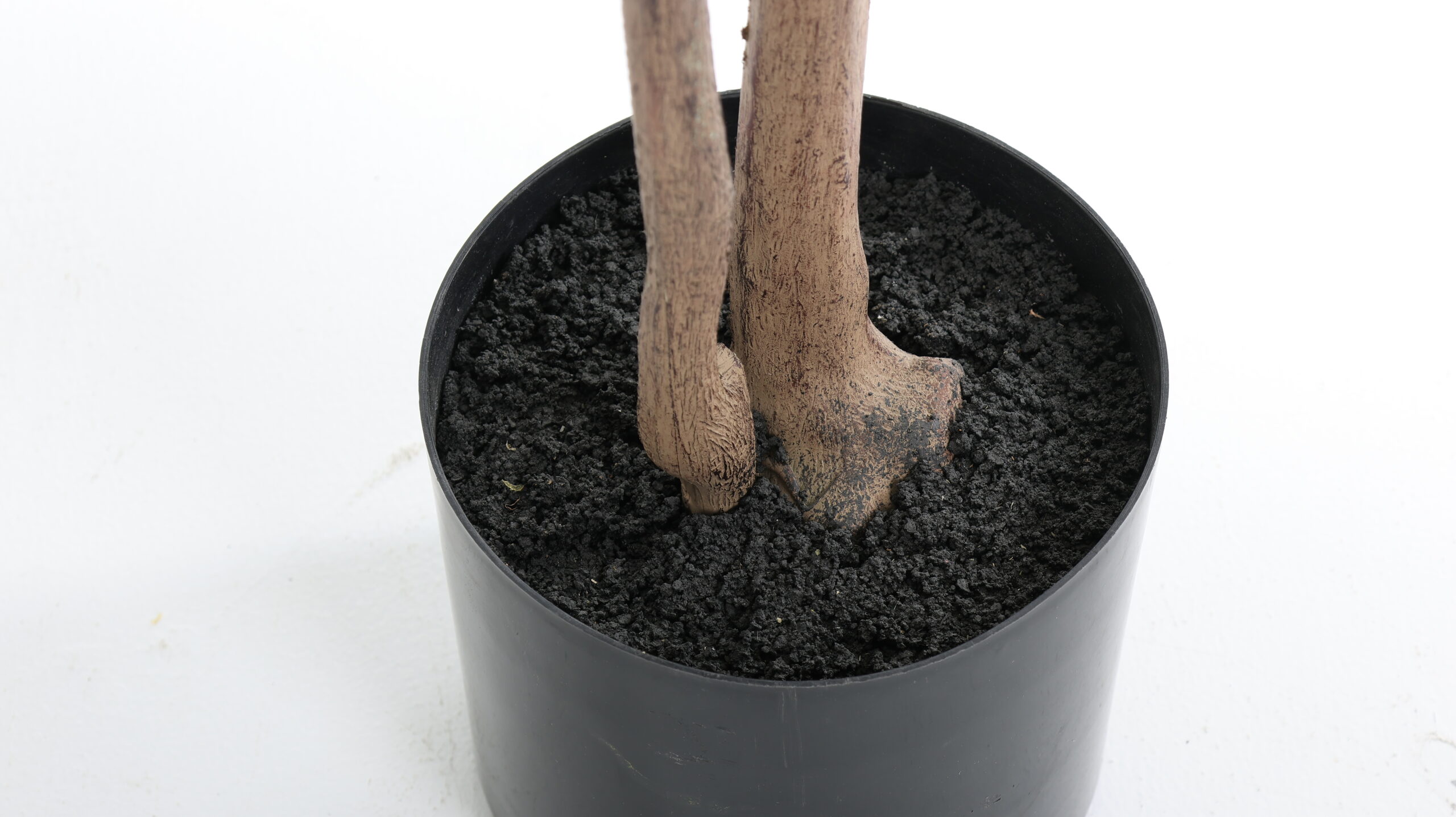
For artificial trees, the planter and base structure are important parts of the final product. A realistic tree can still create problems if the base is unstable or unsuitable for its size.
Check:
• Relationship between tree height and pot size
• Weight of the base structure
• Filling materials used inside the pot
• Anti-tipping solutions
• Stability on different surfaces
For medium and large artificial trees, suppliers should consider the connection between appearance and safety. A well-designed product should stand securely while maintaining a natural appearance.
9. Packaging and Shipping Protection
International transportation creates another quality risk. Artificial plants may travel thousands of miles before reaching the final destination, and poor packaging can damage products that were manufactured correctly.
Common shipping problems include:
• Broken pots
• Bent branches
• Deformed foliage
• Insufficient internal protection
• Excessive movement inside cartons
Before large orders, request:
• Real packaging photos
• Carton specifications
• Loading methods
• Internal protection details
For high-value products or first cooperation, trial shipments and additional packaging evaluations can help identify problems before mass production.
10. Supplier Capability, Documentation, and Intellectual Property Protection
Choosing a supplier involves more than evaluating product samples. Long-term cooperation also depends on production capability, communication, documentation, and responsibility.
Review whether the supplier can provide:
• Material specifications
• Product testing documents
• Export experience
• Factory information
• OEM/ODM support
• Production communication
For custom designs, buyers should also confirm intellectual property ownership and confidentiality responsibilities.
A supplier that understands international buyers’ requirements can provide clearer information and reduce risks during product development and production.
How to Apply This Checklist Before Placing an Order
Quality control should begin before the container arrives. Once products have been shipped, solving quality problems becomes much more difficult and expensive.
A practical sourcing process usually includes:
1. Supplier evaluation
2. Sample review and approval
3. Production confirmation
4. Inspection before shipment
The right supplier should be able to explain materials, production processes, testing options, and quality control procedures clearly.
Source Artificial Plants with Sharetrade
Sharetrade is an experienced artificial plants supplier and wholesale partner for wholesalers, distributors, retailers, e-commerce businesses, interior designers, and commercial project buyers worldwide.
With our own manufacturing facilities in Dongguan and Xiamen, China, together with a network of 100+ trusted partner factories, we offer buyers access to a broad range of artificial trees, plants, flowers, greenery, and custom-designed products. This flexible supply network allows us to help customers find the right products across different styles, materials, sizes, price points, and application requirements—without the need to manage multiple suppliers.
More than a wholesale artificial plants supplier, Sharetrade provides an integrated sourcing and product development solution. Our team can support OEM/ODM product development, material selection, design customization, quality inspection, packaging, and shipment coordination, helping buyers turn product ideas into market-ready artificial plants while reducing sourcing complexity and communication costs.
Whether you are looking for artificial plants wholesale, artificial tree suppliers, custom artificial plants, OEM/ODM manufacturing, or a reliable China artificial plants supplier, Sharetrade can help you build and expand your product range with a more efficient, one-stop sourcing solution.
Looking for a reliable artificial plants supplier in China? Contact Sharetrade to request product samples, discuss wholesale pricing, develop new products, or share your sourcing and design requirements with our team.