What wholesalers, retailers, landscapers, hospitality groups, and commercial buyers should know about materials, UV resistance, testing, and supplier selection.
Outdoor artificial plants are becoming an increasingly practical solution for hotels, restaurants, commercial properties, balconies, patios, rooftops, entrances, and other outdoor spaces. They provide the visual appeal of greenery without the watering, pruning, and ongoing maintenance required by live plants.
But for professional buyers, sourcing outdoor artificial plants is more complicated than choosing products labeled “UV resistant” or “weather resistant.”
A reliable outdoor artificial plant needs to withstand environmental exposure while maintaining its appearance and structural performance. Material selection, UV stabilization, manufacturing processes, product construction, and quality control can all affect how a product performs outdoors.
This guide explains how to evaluate and source UV-resistant outdoor artificial plants for wholesale and commercial applications.
What Makes an Artificial Plant Suitable for Outdoor Use?
The key difference between indoor and outdoor artificial plants is the level of environmental exposure they need to handle.
Indoor artificial plants are primarily designed around appearance and indoor durability. Outdoor products must also account for:
- Prolonged UV exposure from sunlight
- Rain, moisture, and humidity
- High and low temperatures
- Temperature fluctuations
- Wind and movement
- Outdoor installation conditions
- Long-term exposure to changing weather
Without appropriate material selection and UV stabilization, artificial leaves and other components may gradually fade, become brittle, deform, or lose their original appearance.
For professional buyers, “outdoor artificial plant” should therefore be treated as a product performance requirement, not simply a marketing label.
How to Evaluate UV-Resistant Artificial Plants
When sourcing outdoor artificial plants, buyers should evaluate four areas:
1. Material
Ask what materials are used for the leaves, stems, trunks, containers, and other major components.
Common materials used in artificial plants include:
- Polyethylene (PE)
- Low-density polyethylene (LDPE)
- Polypropylene (PP)
- Polyester
- PU
- Silicone
- Rubber and elastomer-based materials
- Injection-molded plastic components
The best material depends on the specific product and the balance required between realism, flexibility, strength, weight, and outdoor durability.
2. UV Stabilization
UV resistance does not come from the material name alone.
Depending on the product construction, manufacturers may incorporate UV stabilizers or other UV-protection technologies into the material formulation during production.
The quality of the formulation, dosage, mixing process, processing conditions, and final product construction can all influence the finished product’s outdoor performance.
This is why two artificial plants made from a similar material may perform differently outdoors.
3. Product Construction
Outdoor durability also depends on how the plant is constructed.
For larger artificial trees and plants, buyers should consider:
- Stem and trunk strength
- Connection points
- Base stability
- Pot or planter construction
- Resistance to wind movement
- Drainage considerations for outdoor applications
- Overall product weight and installation method
A leaf that is UV resistant but attached to a weak structure does not necessarily make the entire product suitable for outdoor use.
4. Testing and Documentation
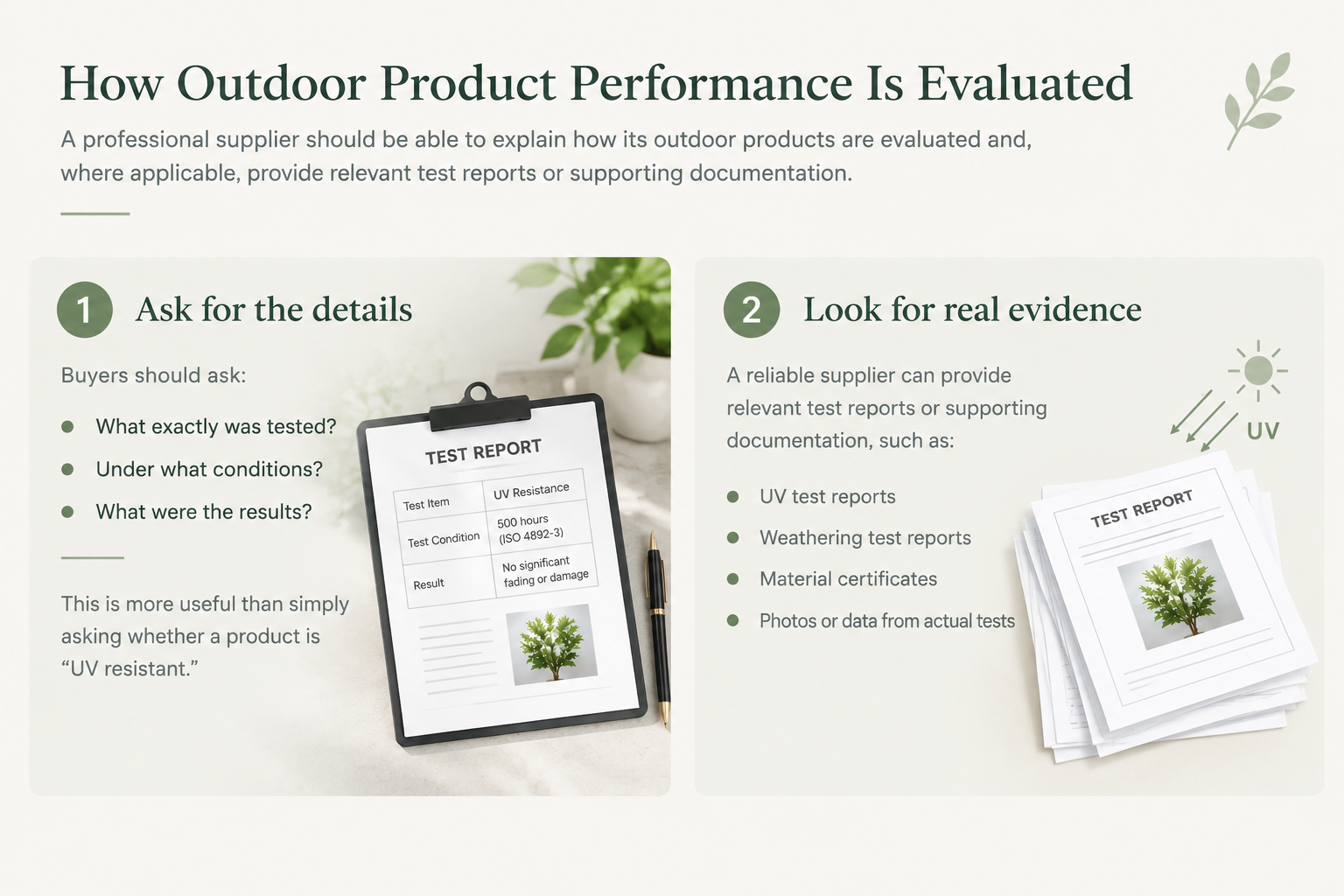
A professional supplier should be able to explain how its outdoor products are evaluated and, where applicable, provide relevant test reports or supporting documentation.
Buyers should ask:
What exactly was tested, under what conditions, and what were the results?
This is more useful than simply asking whether a product is “UV resistant.”
What Should a UV Test Report Tell You?
A UV-related test report should ideally identify several important details:
- The testing method or standard
- Test conditions
- Exposure duration
- The material or finished product tested
- Evaluation criteria
- Test results
- Testing laboratory or organization
For example, ASTM G154 is commonly used for accelerated exposure testing of nonmetallic materials under controlled laboratory conditions involving UV exposure, moisture, and elevated temperature.
However, buyers should be careful when interpreting test hours.
Accelerated laboratory exposure should not automatically be converted into a guaranteed number of outdoor years. Actual outdoor performance depends on factors such as geographic location, UV intensity, temperature, humidity, exposure angle, product construction, and installation conditions.
Therefore, a strong supplier should explain the scope and limitations of its test data rather than using a test number as a blanket guarantee.
Which Outdoor Artificial Plants Have the Most Commercial Potential?
Once durability requirements are understood, buyers can match product types to their intended applications.
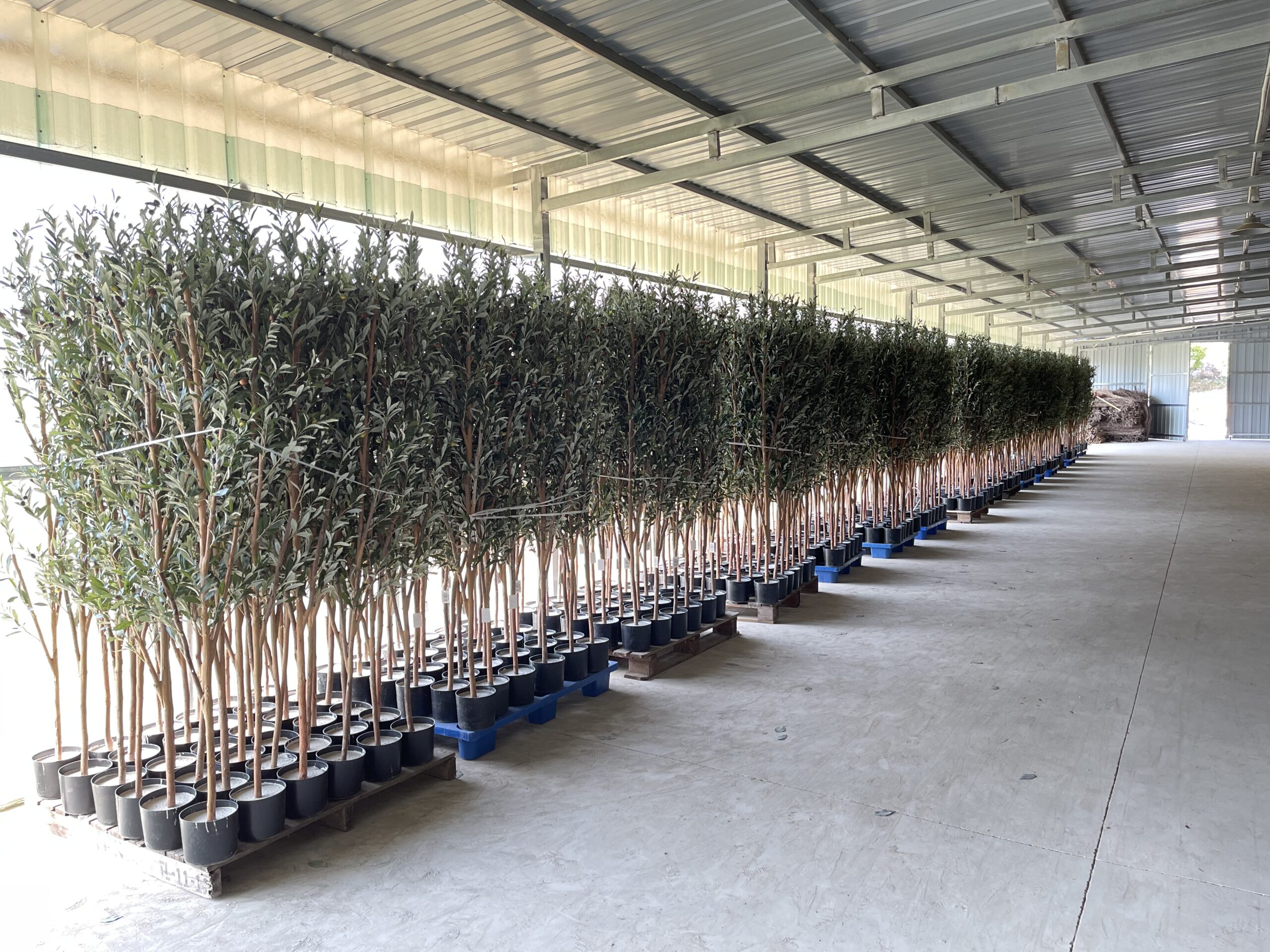
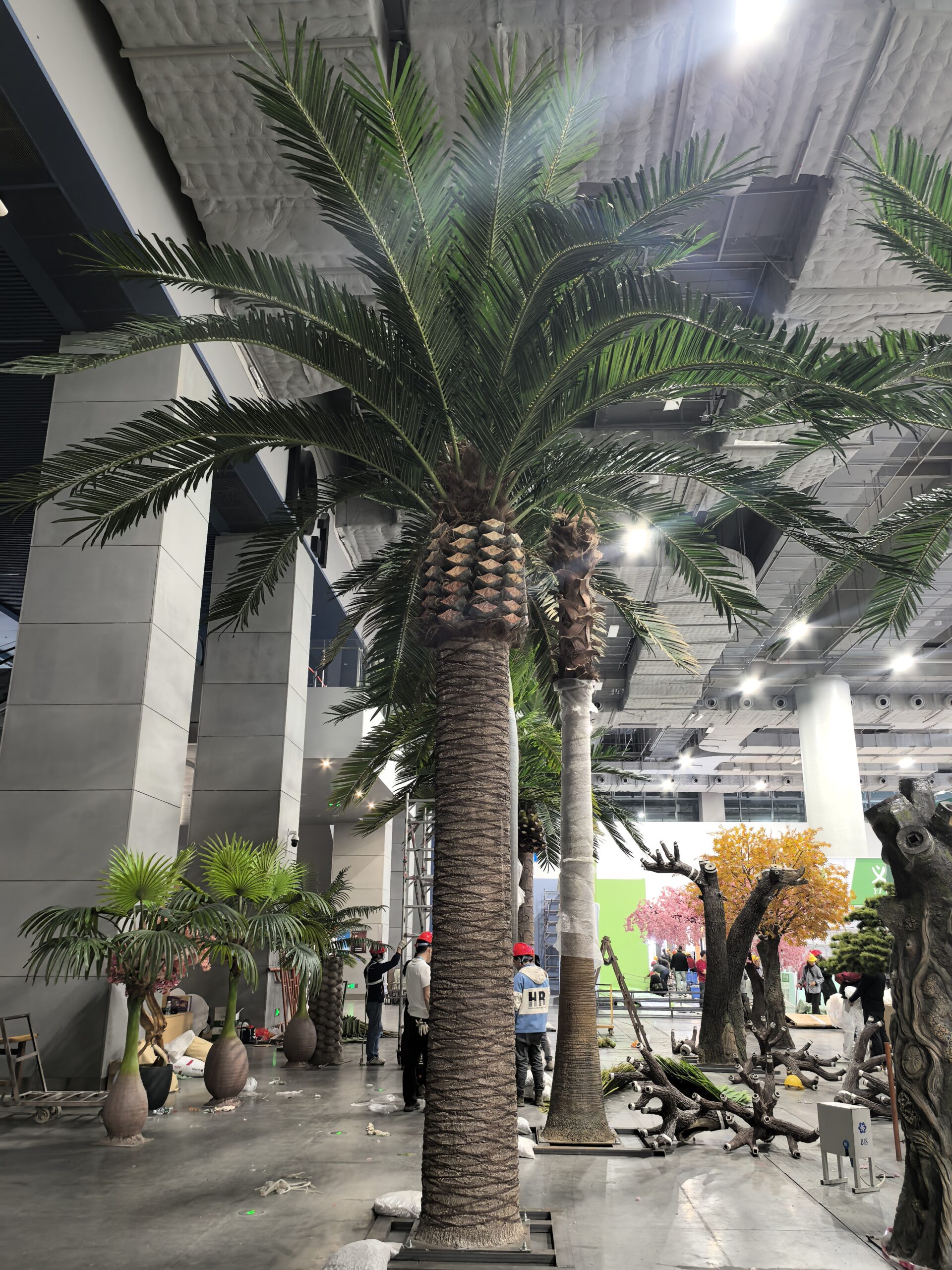
Large Outdoor Artificial Trees
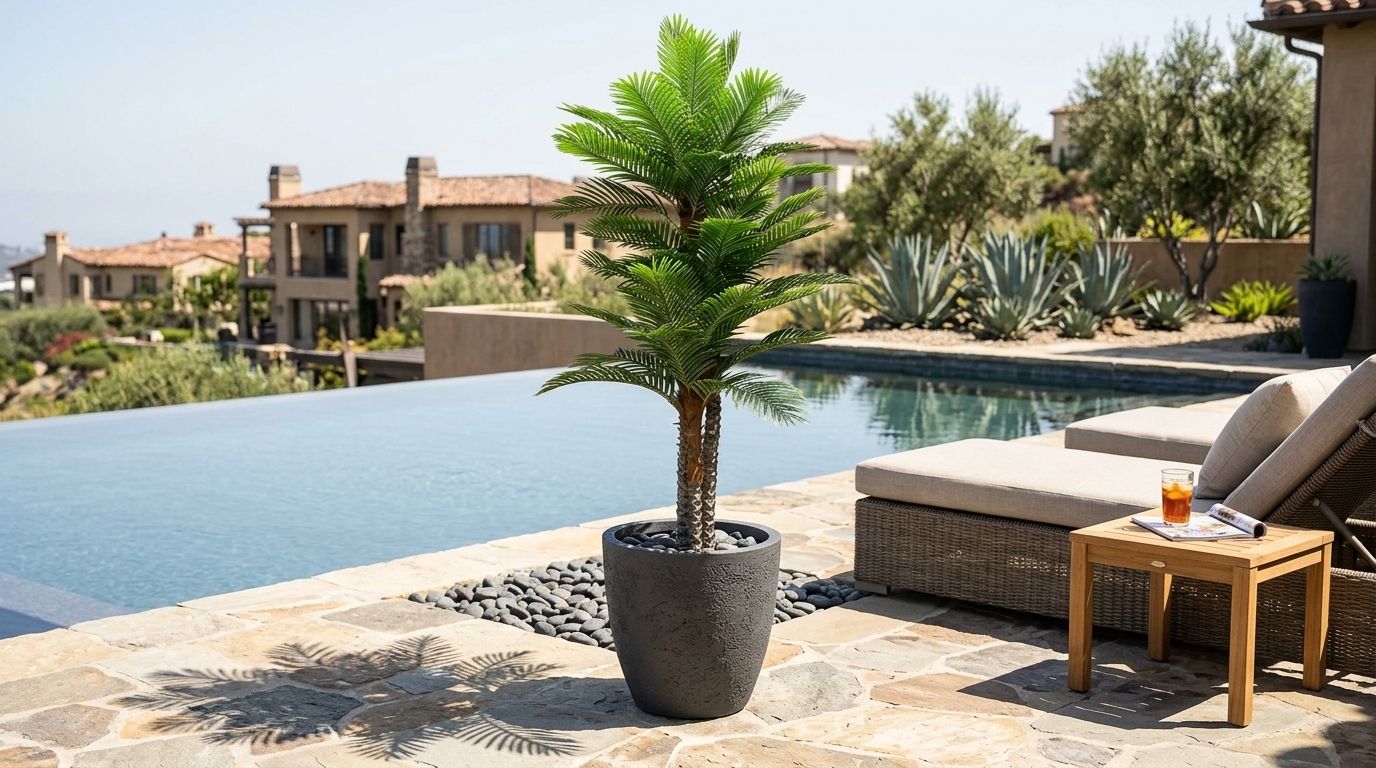
Large artificial trees are suitable for:
- Hotel entrances
- Resorts
- Restaurants
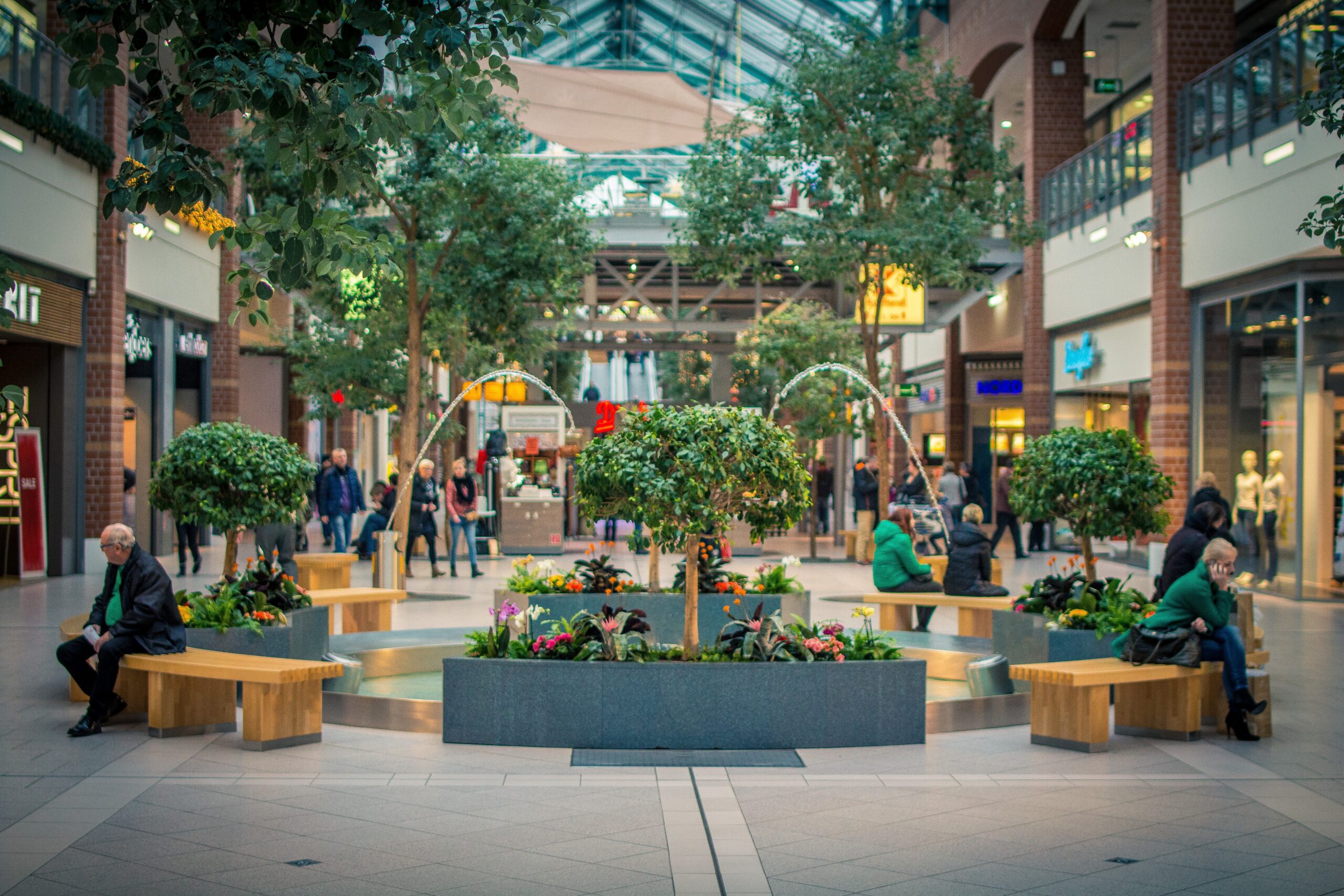
- Commercial buildings
- Shopping centers
- Outdoor dining areas
- Poolside environments
Popular forms include artificial olive trees, palms, ficus trees, and other architectural trees.
Outdoor Artificial Hedges and Green Walls
Artificial hedges and green wall panels can provide privacy and visual screening for:
- Balconies
- Patios
- Rooftops
- Restaurants
- Hospitality spaces
- Commercial boundaries
Potted Outdoor Artificial Plants
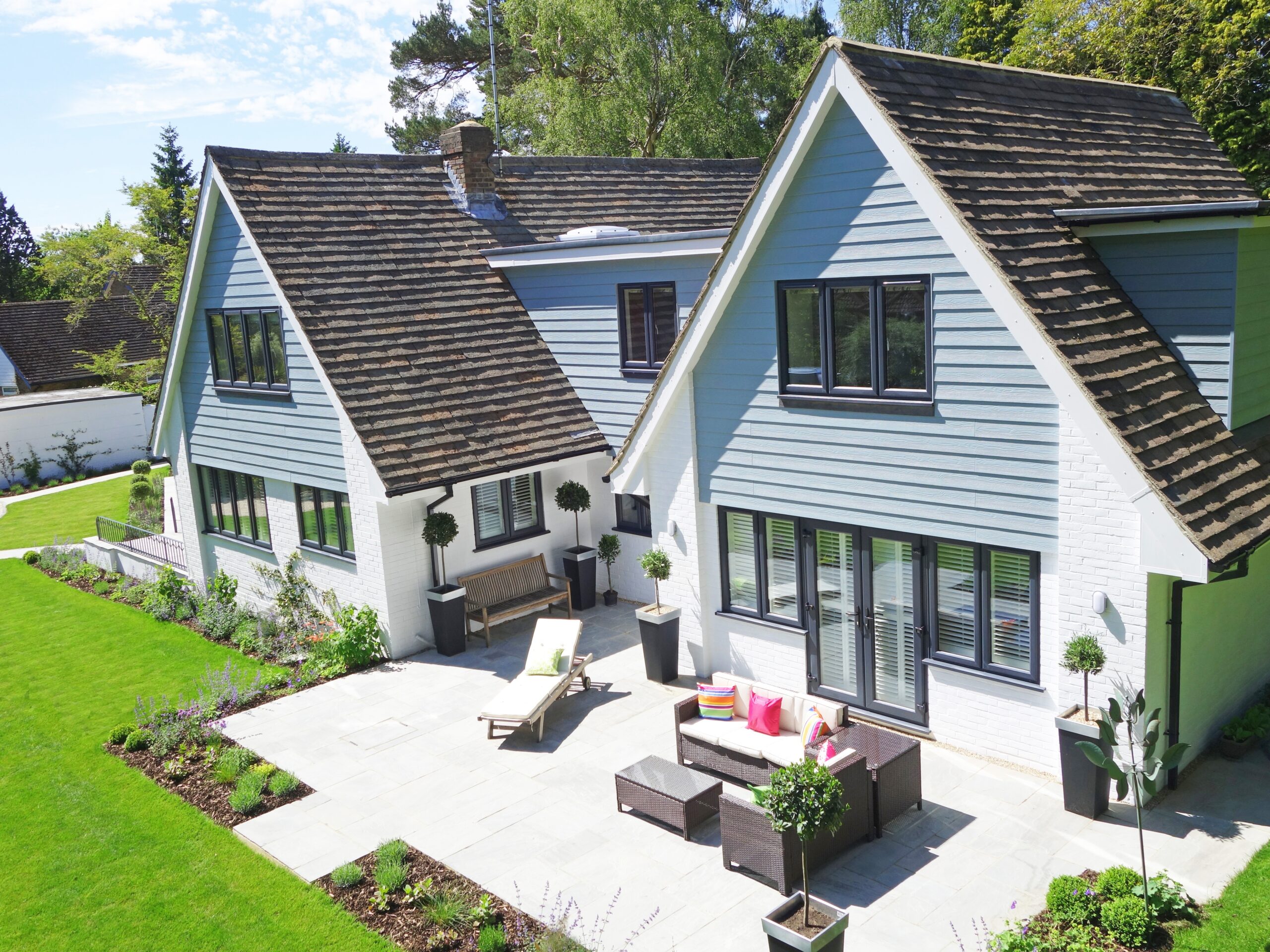
Potted artificial plants are useful where buyers need ready-to-install greenery for patios, entrances, terraces, garden rooms, and other outdoor living areas.
Seasonal Outdoor Greenery
Outdoor artificial greenery can also be used for seasonal merchandising and commercial decoration, including fall displays and holiday greenery.
For wholesalers and retailers, this creates opportunities to build an outdoor assortment that sells across multiple seasons rather than depending on a single peak period.
How Should Buyers Compare Outdoor Artificial Plant Suppliers?
Price should not be the only factor when evaluating an outdoor artificial plant supplier.
A professional sourcing process should consider at least five areas:
Evaluation Area | What Buyers Should Ask |
Materials | What materials are used for leaves, stems, trunks, and pots? |
UV Protection | How is UV resistance incorporated into the product? |
Testing | Is there relevant test data or documentation? |
Construction | Is the product designed for outdoor installation and environmental exposure? |
Manufacturing | Can the supplier maintain consistent material and production quality? |
Buyers should also ask whether the supplier can provide samples for evaluation before placing a larger order.
For commercial projects, sample testing can help buyers assess appearance, construction, material feel, color stability, packaging, and installation requirements before committing to a larger quantity.
Why Manufacturing Experience Matters
Outdoor artificial plants are not simply indoor products with a “UV resistant” label added to them.
The final performance depends on the interaction between material selection, formulation, processing, product construction, and quality control.
This makes manufacturing experience particularly important.
An experienced supplier should be able to discuss why a particular material is appropriate for a product, how UV protection is incorporated, what testing is available, and how the product should be used.
For buyers developing their own collections, OEM and ODM capabilities can also make it possible to adjust product size, materials, construction, planter styles, colors, and other specifications for different markets and applications.
A Practical Checklist for Sourcing Outdoor Artificial Plants
Before selecting an outdoor artificial plant supplier, professional buyers can use the following checklist:
Product
- Is the product specifically designed or recommended for outdoor applications?
- What materials are used?
- Is the construction suitable for the intended environment?
UV Performance
- What type of UV protection is used?
- Is the protection incorporated into the material or applied as a surface treatment?
- Is supporting test data available?
Testing
- What test method was used?
- What was tested: raw material, component, or finished product?
- What were the exposure conditions?
- What results were recorded?
Manufacturing
- Does the supplier have experience producing outdoor artificial plants?
- Can the supplier provide consistent production quality?
- Can samples be provided before bulk production?
Commercial Requirements
- Can the supplier support OEM/ODM development?
- Can products be customized for different markets?
- Can the supplier support wholesale quantities and commercial projects?
This checklist helps buyers move from “Does this product say UV resistant?” to the more important question:
“Does this supplier have the materials, manufacturing process, testing, and product construction needed for my outdoor application?”
Why Outdoor Artificial Plants Represent a Growing B2B Opportunity
For wholesalers, retailers, hospitality buyers, landscapers, and commercial project suppliers, outdoor artificial plants offer an opportunity to expand beyond traditional indoor artificial greenery.
The strongest opportunity is not simply selling a product labeled “outdoor.”
It is developing an assortment that combines:
realistic appearance + appropriate outdoor performance + commercial-ready construction + reliable supply.
As outdoor living spaces, hospitality environments, commercial landscaping, and low-maintenance decorative solutions continue to develop, buyers will increasingly need suppliers that understand both the aesthetic and technical requirements of outdoor artificial greenery.
Source Outdoor Artificial Plants with Sharetrade
Sharetrade specializes in artificial trees and plants for wholesalers, retailers, distributors, and commercial project buyers.
Our capabilities cover product development, OEM/ODM customization, material selection, product sizing, planter options, and commercial artificial greenery solutions.
For buyers developing an outdoor artificial plant collection, the goal is not simply to find the lowest-cost product. It is to find a manufacturing partner that can help match product design, material selection, outdoor requirements, and commercial specifications.
If you are sourcing UV-resistant outdoor artificial plants, outdoor artificial trees, artificial hedges, or potted outdoor greenery, contact Sharetrade to discuss samples, product development, and wholesale sourcing requirements.